
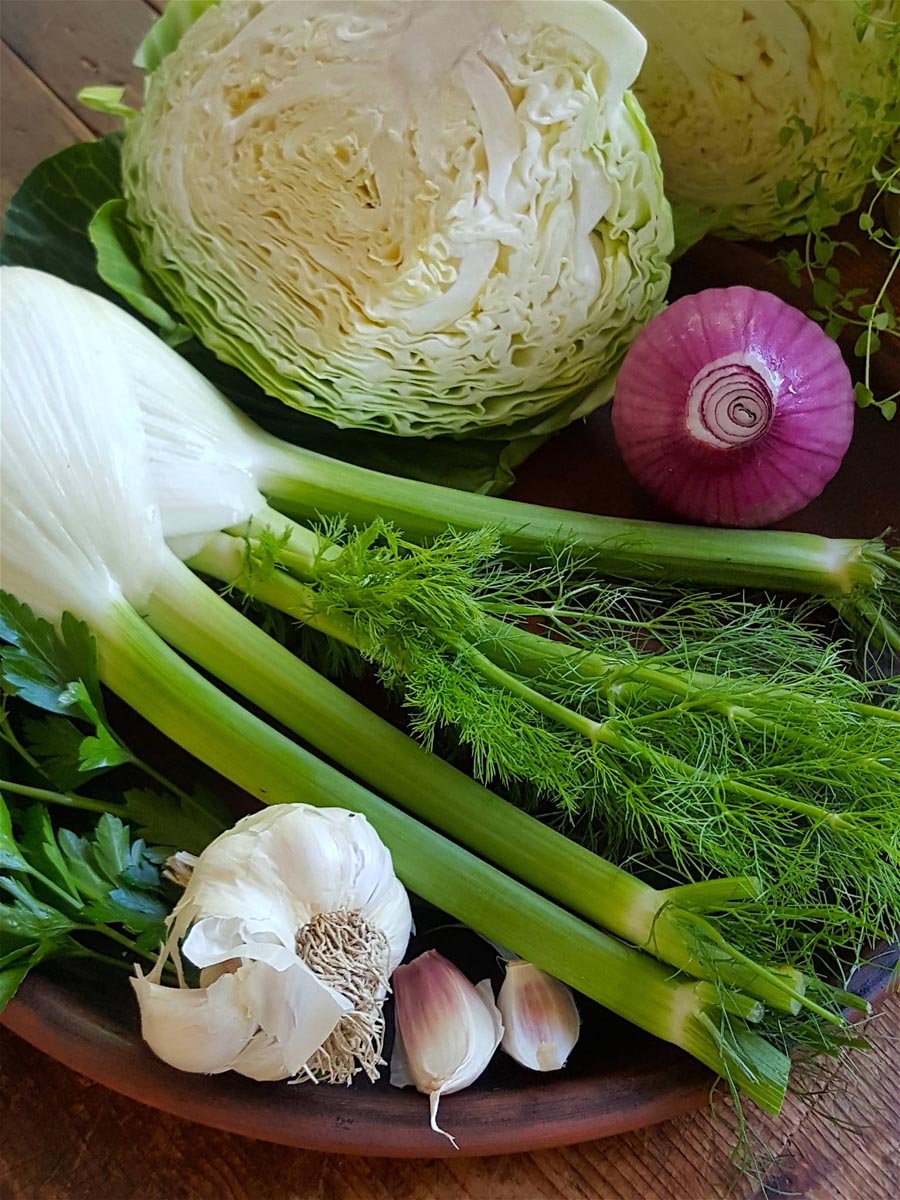
Cabbage & Fennel with Creamy Mustard Dressing
You are hearing it everywhere BUY LOCAL and for good reason. Buying local ensures those around you have jobs – you are looking after your fellow citizens and encouraging enterprise in your own backyard. Businesses are likely to be smaller, rather than huge multi-national conglomerates. You are more likely to know how things are grown and produced, or it would certainly be easier to find out. Traceability is often just a few phone-calls away. And you are cutting out air miles (reducing the carbon footprint) and shortening travel times so food is likely to be fresher and there may well be less packaging, including plastic ‘bubble wrap’ or plastic ‘pillows’, plastic outers and tape and plastic banding. All of this is easy enough to get your head around. But there are many things a country does need to import. And imports do add variety to a modern diet. But do we need asparagus in winter? Strawberries year-round? Nope. I don’t think so (you may disagree). Lemons? Mmm. It would be hard to live without them, I think (again, you may disagree). But those damned stickers applied to each piece of fruit? Those stickers take more than a lifetime to break down, if ever. Are they stuck on by growers or supermarkets? Perhaps it is to prevent rip-offs, say inferior Kiwifruit being sold off as New Zealand Kiwifruit? Please feel to free to comment in the box below. Start a discussion, let’s get chatting …
Back to local produce … New Zealand produces fantastic garlic. It is harvested through the summer months and is on sale for about 9 months of the year. You can always tell New Zealand garlic because the shaggy root ends are NEVER trimmed. It’s just as easy to spot Chinese garlic a mile away, looking pristine, unnaturally white and shorn to the end of the corm. Californian garlic looks more like New Zealand garlic, although it is trimmed, and is a good standby between our seasons.