What makes a Greek salad so good?
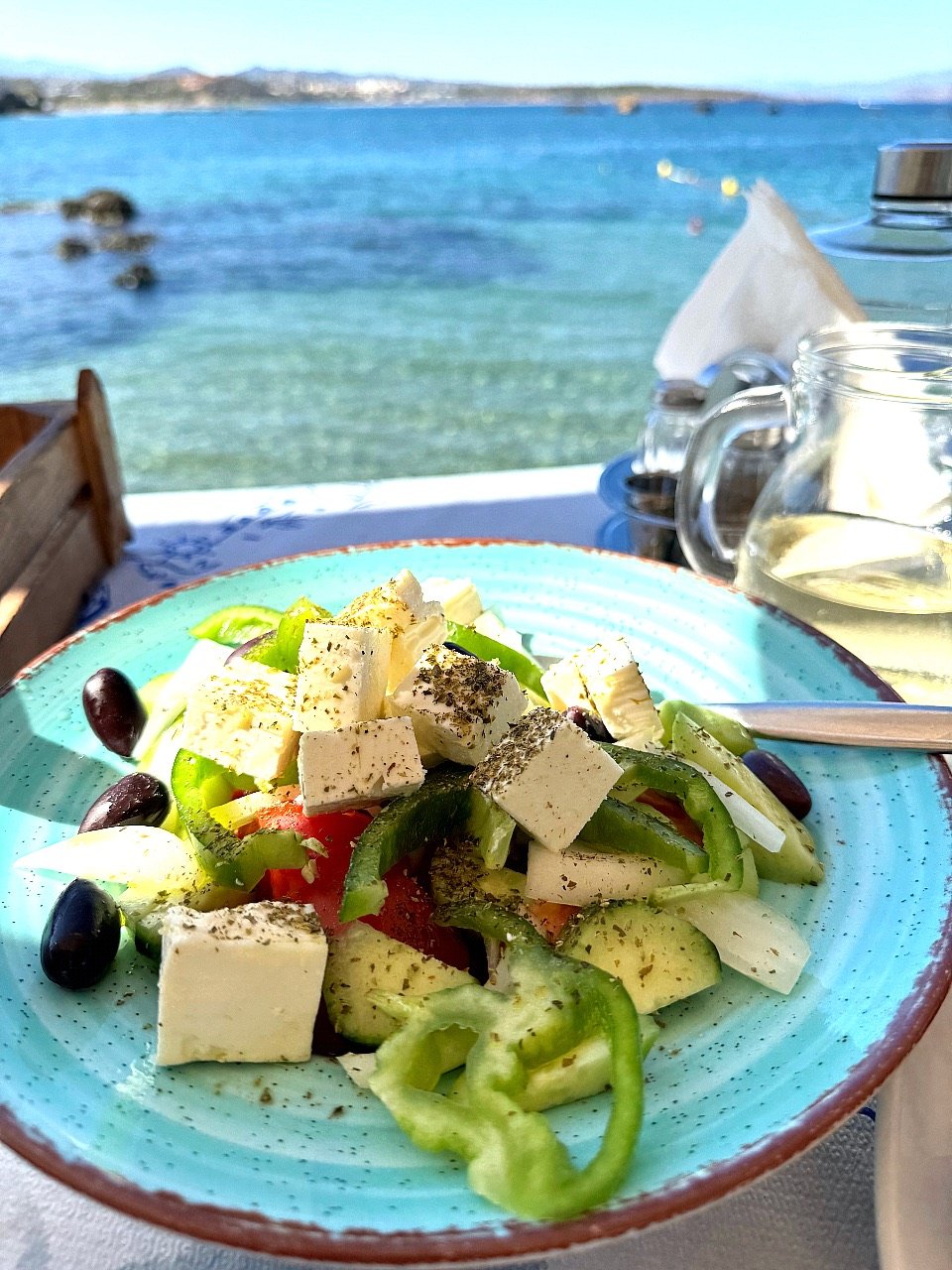
Greek salad is a typical summer salad found throughout Greece and the Greek Islands, probably named by tourists rather than the Greeks themselves, made with ingredients that are plentiful in summer. I tried many variations on the theme during a recent trip to Greece, and as we head towards summer, I thought I would share my thoughts on what makes a quintessential Greek salad, and why it is so good.

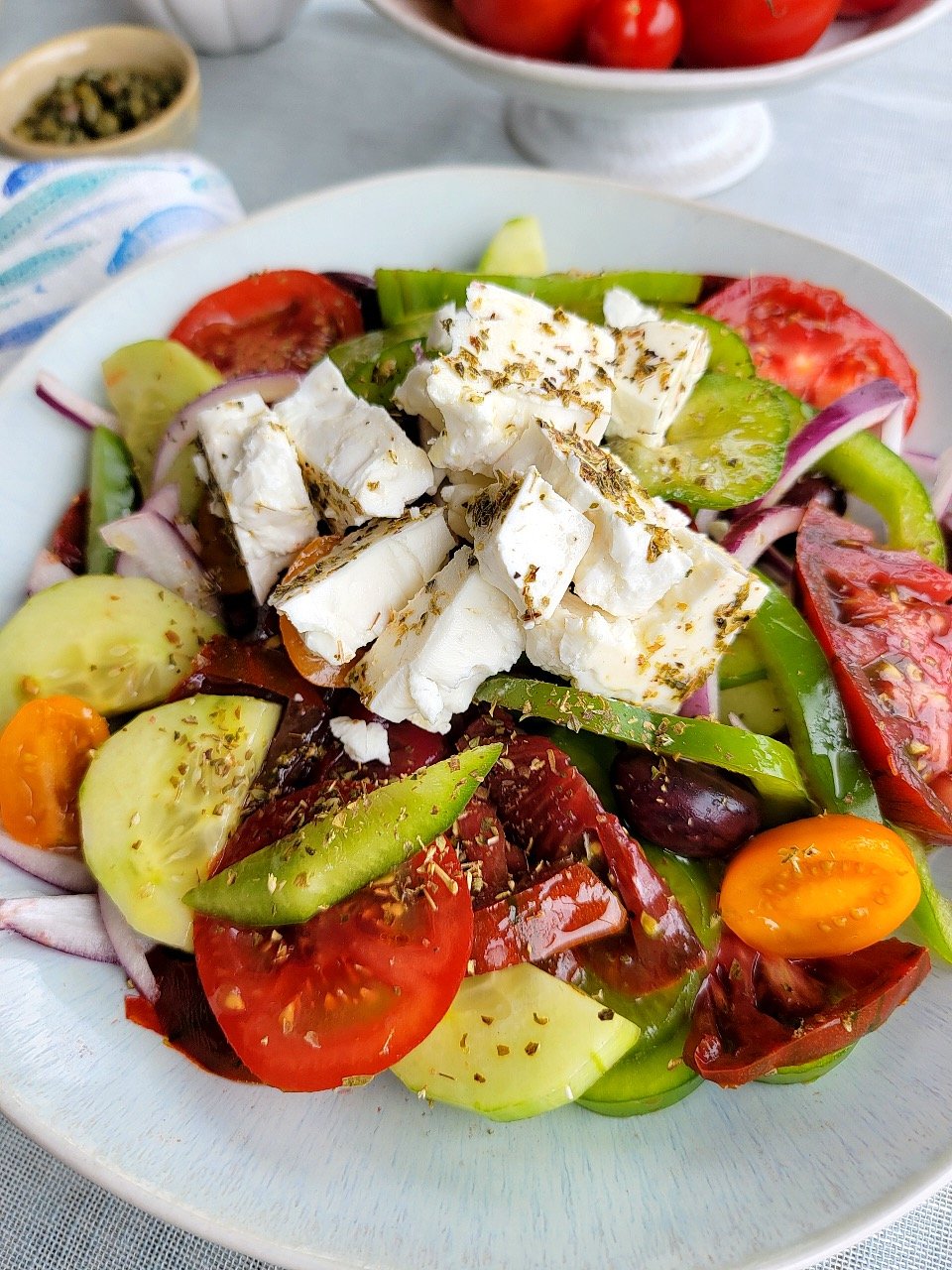
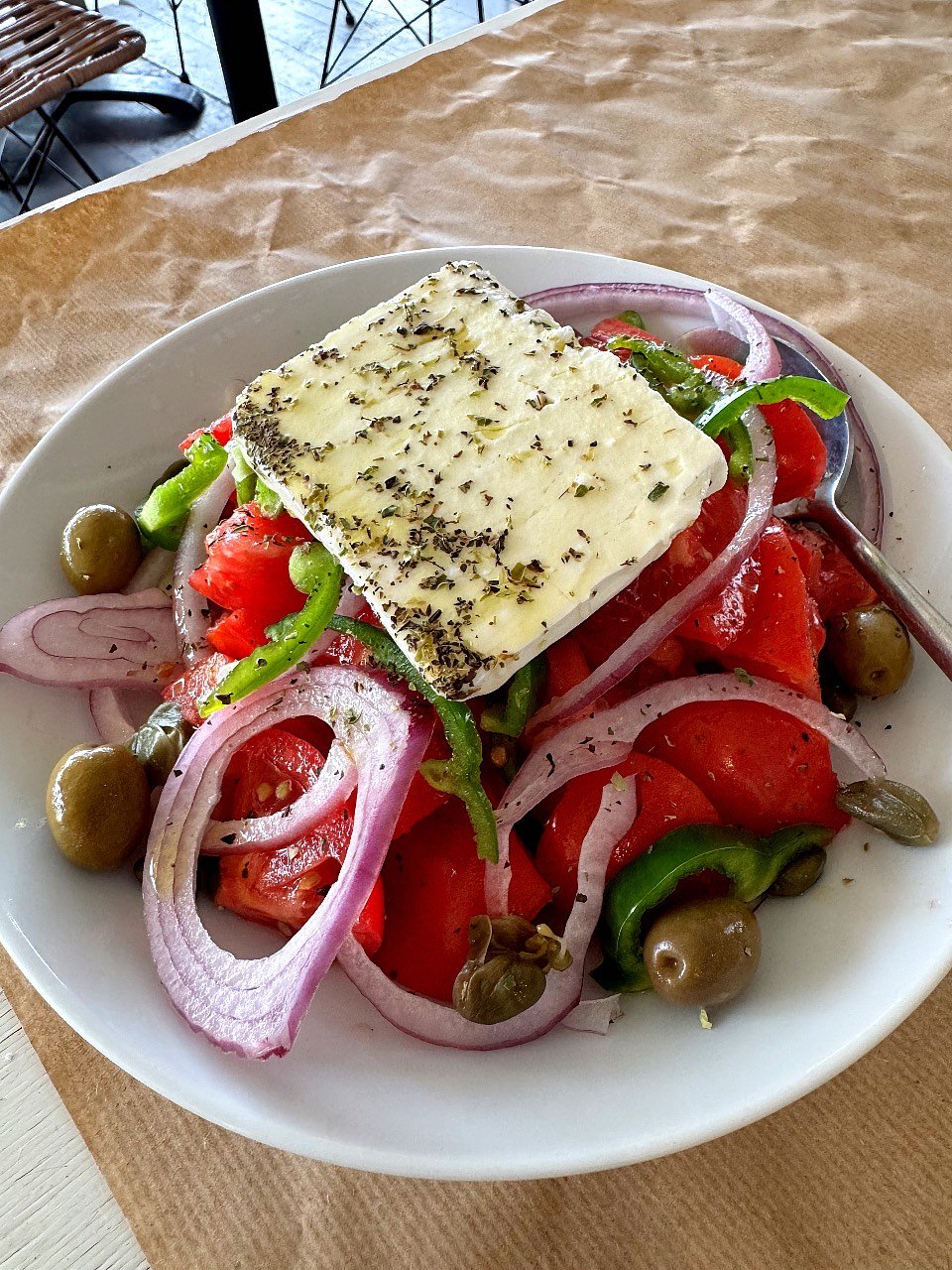
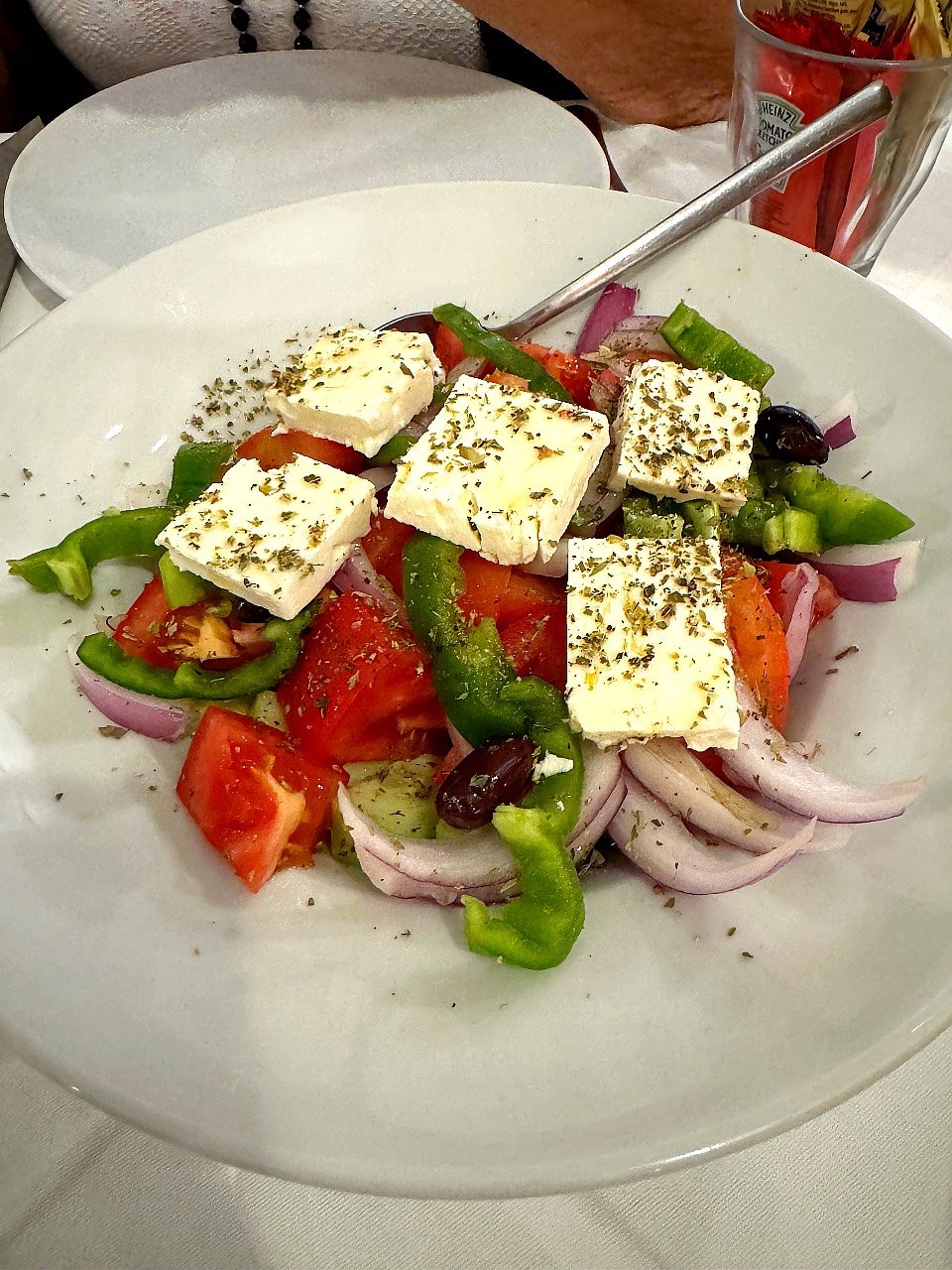
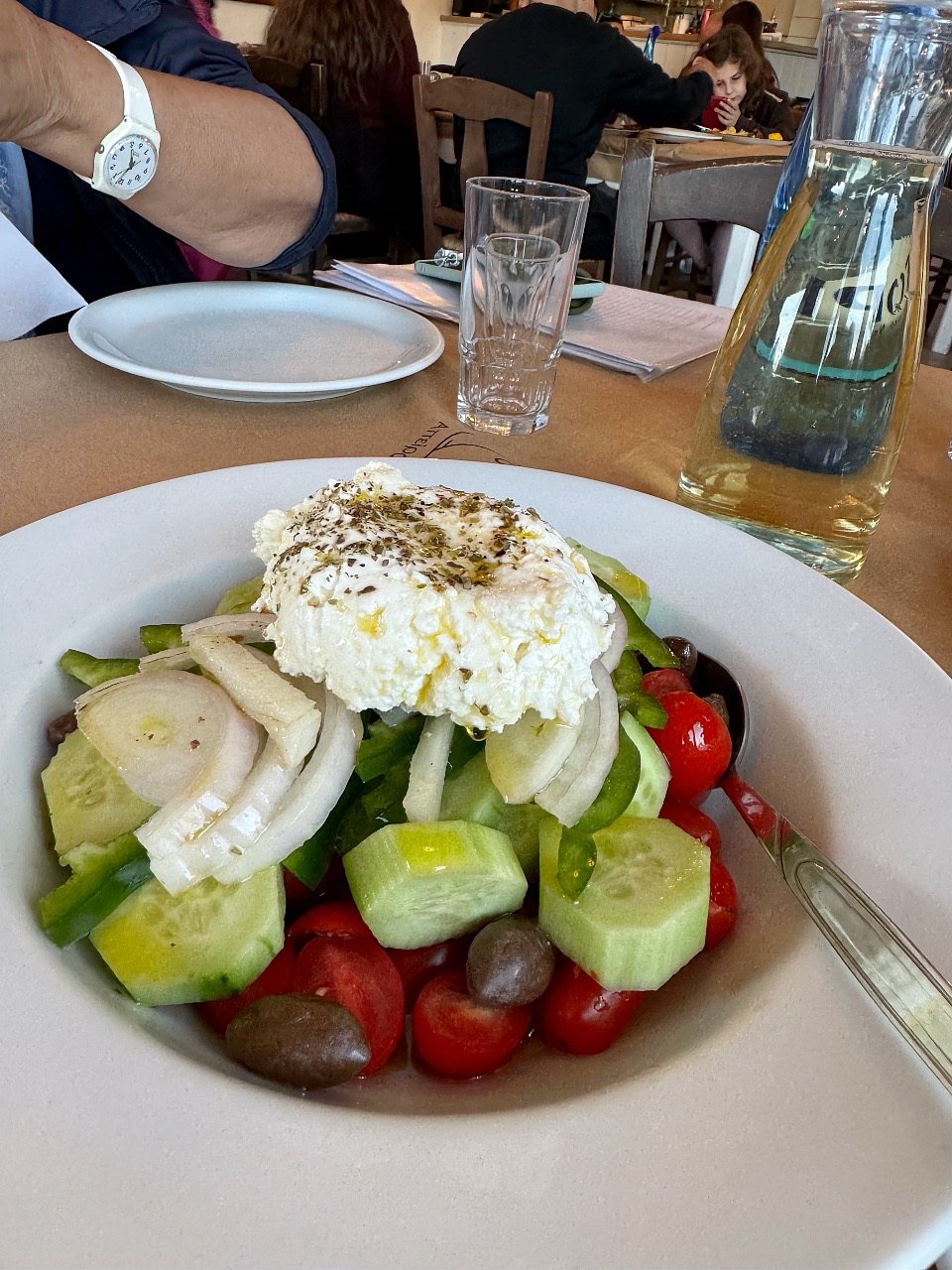
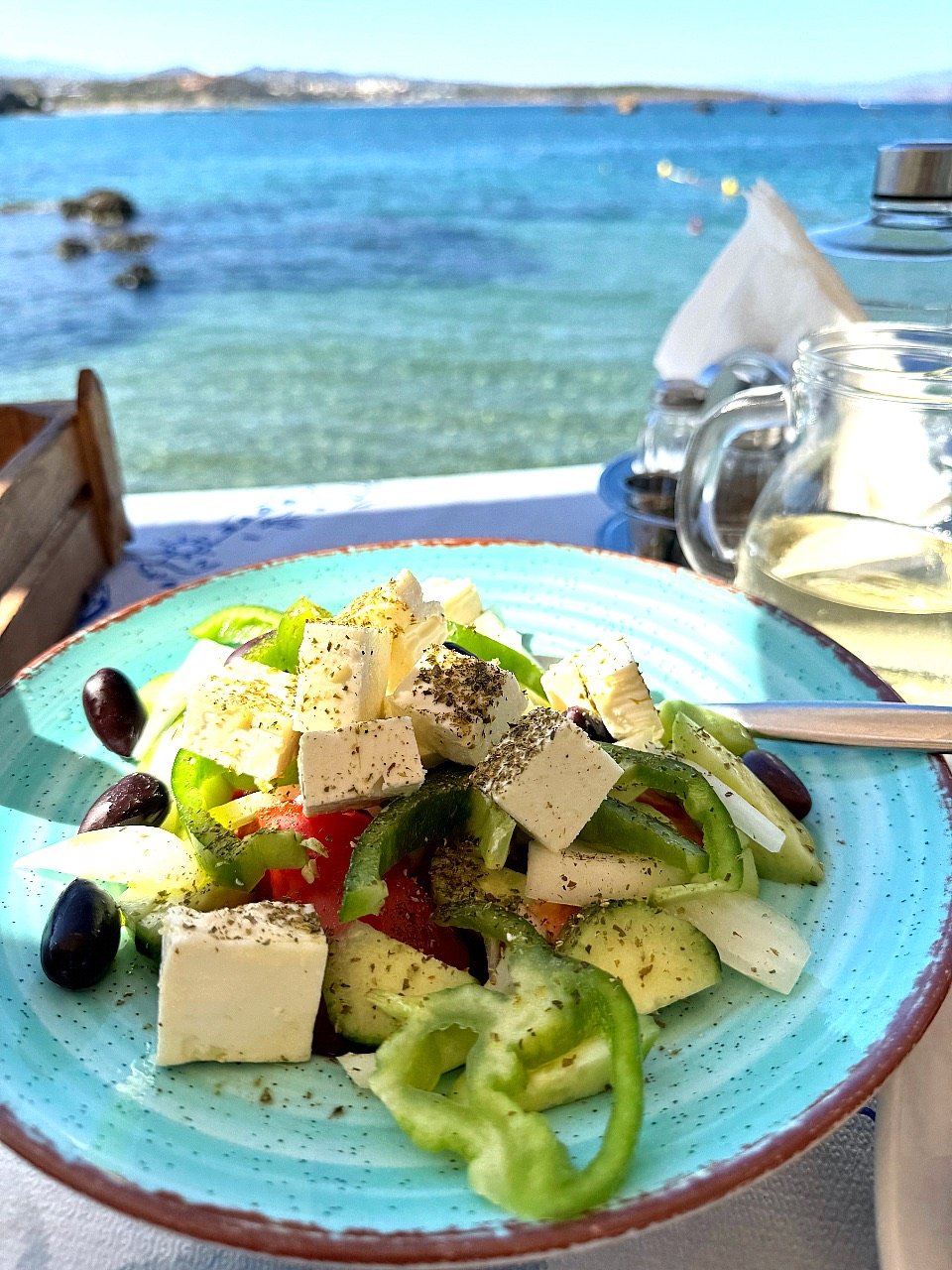
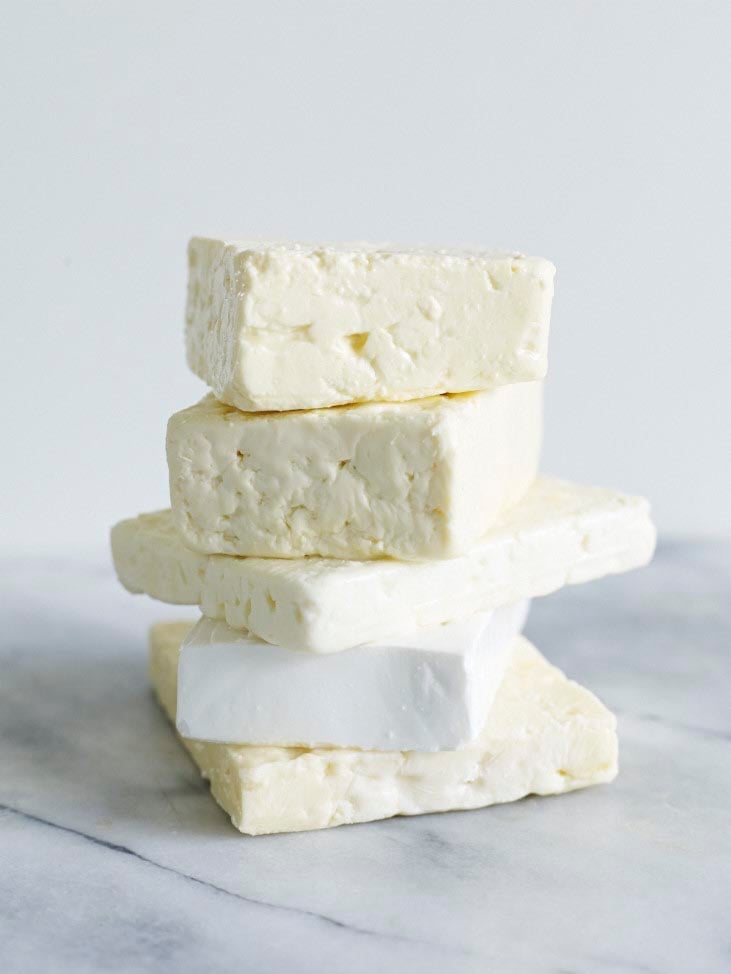
A classic Greek salad consists of six items: green pepper (bell pepper/ capsicum), tomato, cucumber, red onion, olives and feta. And a generous sprinkling of Greek oregano along with red wine vinegar and olive oil. The feta is usually just a slab on top, or cubes, no mixing through …. Well, that is until you go to the island of Naxos, and they throw that idea out the window and toss mizithra cheese through the salad!
I didn’t detect garlic in any of the salads I tried. Red wine vinegar was the most common acidulant, but lemon was also used, and sometimes both: vinegar in a dressing and a squirt of lemon over the top to brighten the salad. Some salads had no salt, or very little, leaving that job to feta and olives. Other salads had capers, some had dill or parsley. But the six ingredients were in every salad: green pepper, tomato, cucumber, red onion, olives and feta. And the feta was never nude!
That doesn’t mean that you can’t make a dressing with red wine vinegar, olive oil, salt, pepper, garlic and mustard and throw in dill and parsley; rules are there as a guide, they’re not laws. But I think the Greeks have got it right – the quintessential Greek salad remains the freshest, most colourful, most balanced combination of flavours.
Green peppers are bitter and less popular than red or yellow ones, but their bitterness is an essential element in balancing a typical salad; it tempers the sweetness of tomatoes. Cucumbers are watery, washing away the saltiness of feta and olives and the pungency of red onion. They are also crunchy, contrasting with the softness of feta and tomatoes. Dried oregano is used everywhere, on everything, and provides a spicy, herbal note. Don’t substitute fresh oregano for dried Greek oregano – the result will be disappointing.
Keep the ingredients in chunks or thick slices – this is not meant to be a dainty salad. When I see a salad of finely chopped ingredients, I think, nope, that misses the boat; the size of the ingredients alters how they work in the mouth. You want that hit of salt, you long for that fresh crunch of cucumber, you enjoy the bitter crunch of green pepper washed away by a sweet burst of tomato – when everything is chopped small, the contrasts are less exaggerated; it is not as crunchy or refreshing.
The lovely bright colours of the salad are part of the appeal. Don’t toss the feta through and mess it up. Keep it whole, or in large cubes, and break it apart with a fork and spoon as you serve the salad.
On the island of Naxos, Greek salad comes with mizithra cheese, a soft whey cheese not dissimilar to ricotta. At serving time, they toss it through the salad. It doesn’t look so good – very bitty and messy – though it tastes good.